
The Psychology of Texture: Why Relief & Sculptural Art Is Growing in Popularity
For decades, artwork in interior design was largely defined by colour, composition, and imagery. Today, however, designers are increasingly looking beyond what art depicts and focusing on how it feels.
As luxury interiors become more sophisticated and materially driven, relief art, sculptural wall installations, and textured artworks are becoming some of the most sought-after additions to contemporary spaces.
This shift is about more than aesthetics. It is rooted in psychology, sensory experience, and the growing desire to create interiors that feel authentic, calming, and memorable.
The rise of textured and sculptural art reflects a broader change in how we experience our environments
Why Texture Matters in Interior Design
Humans naturally respond to texture.
Long before we consciously notice colour or form, our brains process surface qualities and material characteristics. Texture helps us understand an environment, influencing how comfortable, luxurious, or inviting a space feels.
In interior design, texture creates:
- Visual interest
- Depth and dimension
- Warmth and comfort
- A sense of craftsmanship
- Emotional engagement
Without texture, even beautifully designed spaces can feel flat or sterile.
This is one of the reasons relief and sculptural artworks have become increasingly popular in both residential and commercial interiors
The Shift Away From Flat Surfaces
Modern luxury interiors often feature:
- Natural stone
- Textured fabrics
- Architectural wall panelling
- Handmade finishes
- Organic materials
Against these richly layered environments, traditional flat artwork can sometimes struggle to create the same level of visual engagement.
Relief and sculptural art introduce a physical dimension that complements these contemporary design approaches.
Rather than simply occupying wall space, textured artworks become part of the architecture itself.
How Relief Art Creates Emotional Impact
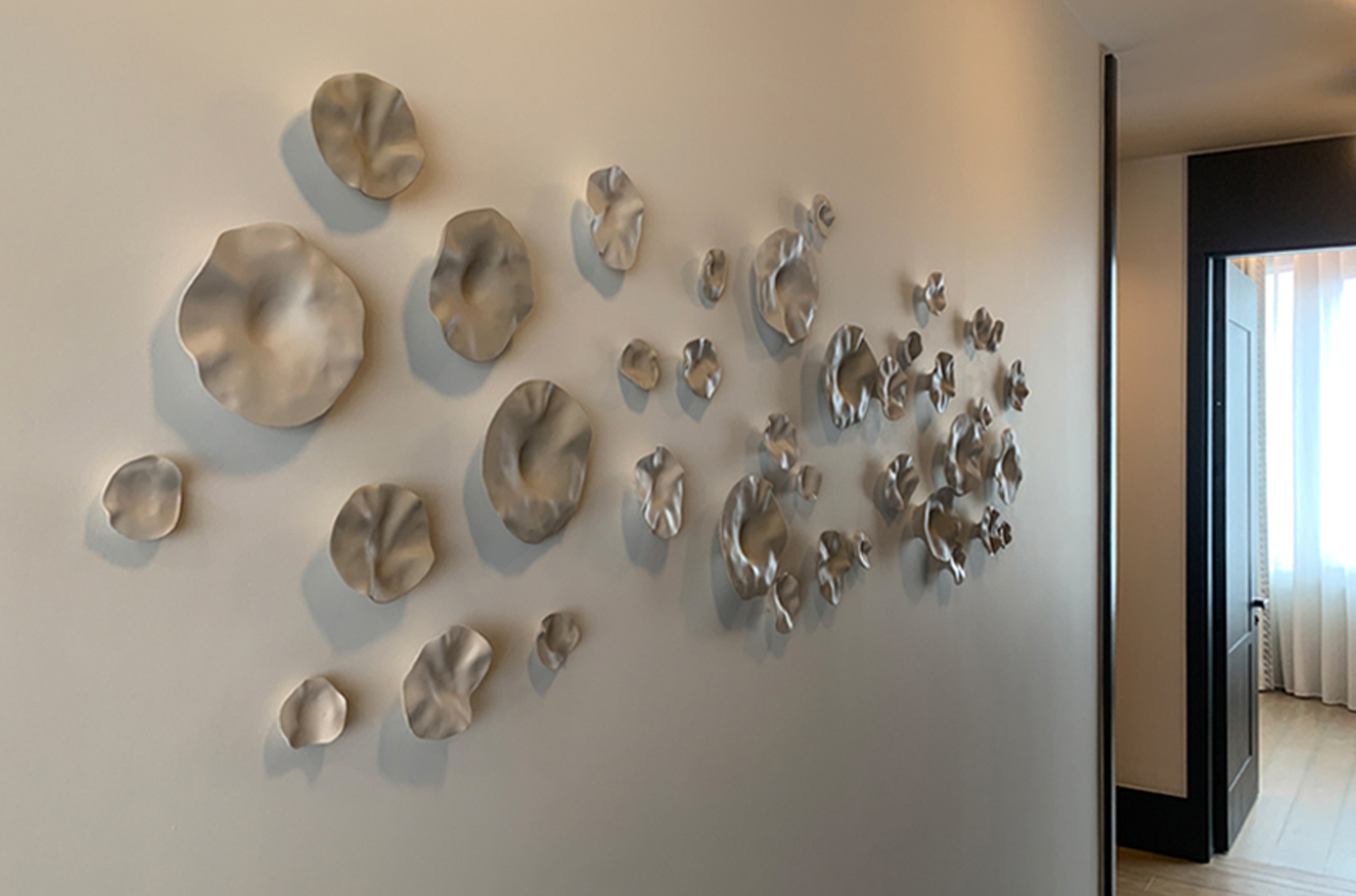
The image below demonstrates why relief artwork has such a strong presence within a space.
Featured Image
Image Title:
Contemporary Sculptural Wall Installation for Luxury Interiors
Alt Text:
Modern sculptural wall installation featuring textured metallic forms, demonstrating the growing popularity of relief and three-dimensional artwork in contemporary interior design.
Caption:
Relief and sculptural artworks introduce depth, movement, and texture to interiors, creating a more immersive and engaging visual experience than traditional flat artwork.
The subtle curves, shadows, and varying depths encourage viewers to engage with the piece from different angles.
Unlike a painting, which presents a single visual surface, sculptural artwork changes throughout the day as light conditions evolve.
This constant interaction creates a stronger emotional connection with the space.
The Role of Light and Shadow
One of the most powerful aspects of relief art is its relationship with light.
As natural and artificial lighting changes, shadows move across the surface, creating a dynamic visual effect.
This means the artwork is never entirely static.
Benefits include:
- Greater visual depth
- Enhanced architectural interest
- Increased perception of luxury
- A constantly changing viewing experience
In high-end interiors, this interaction between light and form adds a level of sophistication that flat artwork often cannot achieve
Why Luxury Interiors Are Embracing Sculptural Art
Luxury design increasingly focuses on subtlety rather than excess.
Instead of relying on bold colours or overt decoration, many designers are creating interest through:
- Materiality
- Texture
- Craftsmanship
- Layering
Sculptural wall art aligns perfectly with this philosophy.
It can make a strong statement without overwhelming the room, creating impact through form rather than visual noise.
This makes it particularly effective in:
- Luxury residences
- Boutique hotels
- Show homes
- Executive offices
- High-end hospitality space
The Connection Between Texture and Wellbeing
There is growing evidence that textured, natural, and tactile environments contribute to a greater sense of wellbeing.
People are increasingly drawn towards:
- Organic forms
- Handmade finishes
- Natural materials
- Imperfect surfaces
These elements create spaces that feel more human and less manufactured.
Relief artwork often reflects these principles through its use of texture, movement, and handcrafted details.
As a result, textured art can help create interiors that feel calmer, warmer, and more inviting.
Why Bespoke Sculptural Art Is Becoming More Popular
As demand for unique interiors grows, designers are looking for alternatives to mass-produced artwork.
Bespoke sculptural art offers several advantages:
Perfect Scale
Pieces can be created specifically for the wall and surrounding architecture.
Material Integration
Finishes can be selected to complement furniture, lighting, and architectural materials.
Stronger Design Cohesion
The artwork becomes part of the overall design narrative rather than an afterthought.
Exclusivity
No two projects are the same, allowing designers and clients to create truly individual spaces.
The Future of Interior Art
The popularity of relief and sculptural artwork reflects a broader movement within interior design.
People are moving away from purely decorative spaces and seeking environments that engage multiple senses.
Art is no longer expected to simply add colour to a room. It is increasingly being used to introduce:
- Texture
- Depth
- Movement
- Material richness
- Emotional connection
As this trend continues, sculptural and mixed-media artworks are likely to become an even more important part of luxury interior design.
Final Thoughts
The rise of relief and sculptural art is not simply a passing trend. It reflects a deeper shift towards more tactile, immersive, and emotionally engaging interiors.
By introducing texture, shadow, and physical depth, these artworks create experiences that traditional flat pieces often cannot achieve.
For designers, developers, and homeowners seeking to create distinctive spaces, relief and sculptural art offer an opportunity to add impact in a way that feels sophisticated, timeless, and deeply connected to the architecture around it.