
How Interior Designers Commission Art Without Losing Control of the Concept
Commissioning art should strengthen your design concept — not dilute it, derail it, or turn it into a negotiation you didn’t sign up for.
Yet many interior designers quietly struggle with the same fear: once the art brief leaves your hands, you lose control.
That fear is justified — but only when the process is wrong.
Here’s the straight truth: losing control isn’t caused by commissioning art. It’s caused by vague briefing, late decisions, and the wrong type of artist or studio.
This article breaks down how experienced interior designers commission bespoke art without surrendering authorship, intent, or aesthetic authority.
1. Control Starts With the Brief — Not the Artist
Most designers think they’ve written a clear art brief. In reality, they’ve described a mood, not a framework.
A strong commissioning brief does four non-negotiable things:
-
Defines the role of the artwork (anchor, connector, statement, or support)
-
Sets clear visual boundaries (palette limits, scale, contrast tolerance)
-
Explains what must not happen as clearly as what should
-
Anchors the artwork to the interior concept, not personal taste
If the brief relies heavily on phrases like “something subtle,” “organic but modern,” or “inspired by…”, you’ve already handed over control.
Precision is not restrictive. It’s protective.
2. Choose Artists Who Interpret — Not Compete
The fastest way to lose control is commissioning an artist who wants to “leave their mark.”
That sounds romantic. It’s a disaster in real interiors.
For commissioned interiors, you want an artist or studio that:
-
Is comfortable working within constraints
-
Understands spatial hierarchy (walls, sightlines, furniture dominance)
-
Prioritises the interior over their own signature style
A professional bespoke art studio understands one thing clearly:
the designer leads — the artwork supports.
If an artist pushes back on boundaries too early, that’s not collaboration. That’s ego.
3. Visual Control Comes From Early Mockups
Designers lose leverage when art is presented too late.
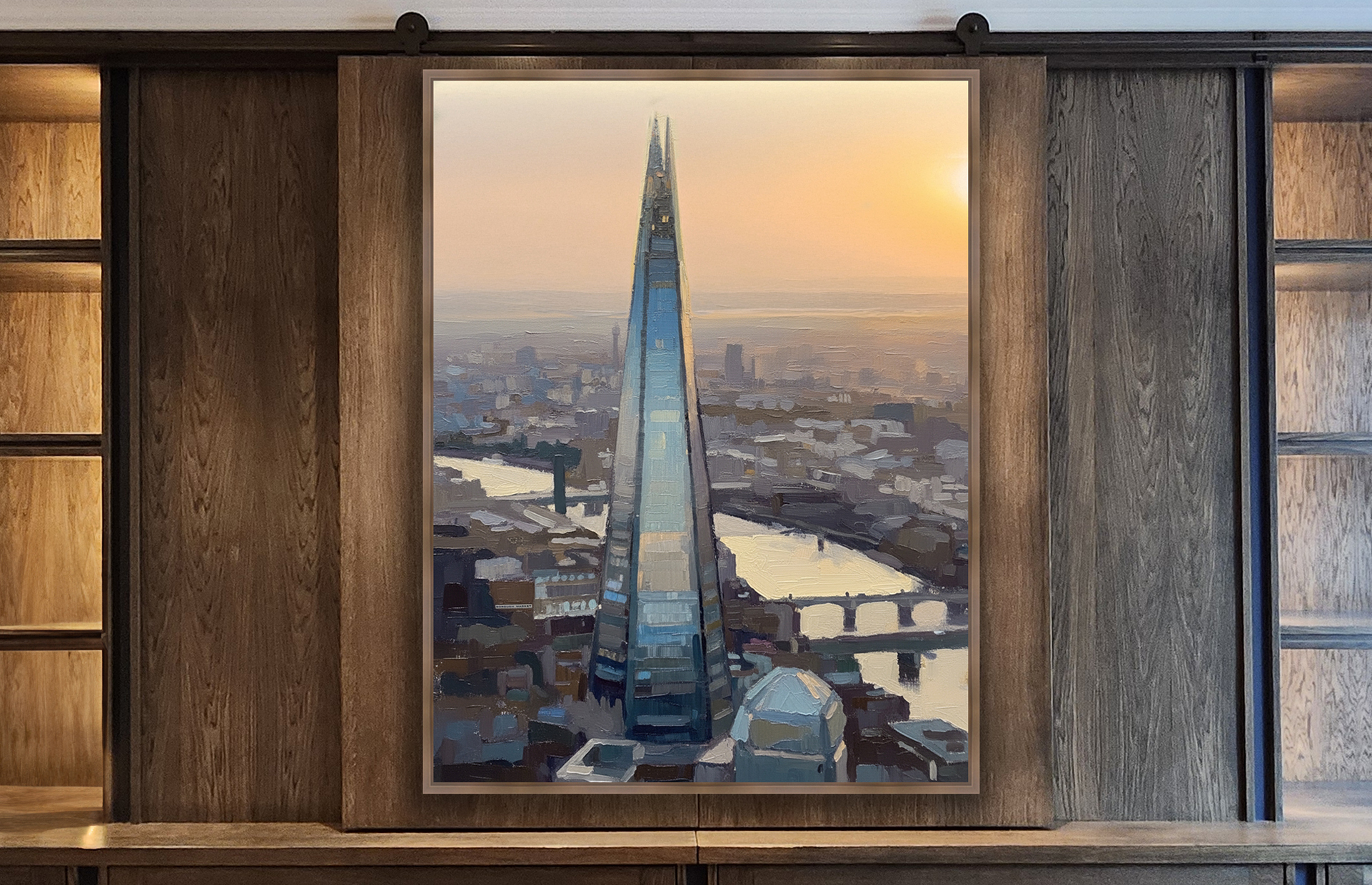
Digital mockups aren’t a luxury — they’re a control mechanism.
Effective mockups should:
-
Show artwork at true scale in the space
-
Demonstrate colour interaction with finishes and lighting
-
Allow directional feedback before time is sunk into execution
When mockups happen early, revisions are strategic.
When they happen late, revisions are emotional.
The earlier you see it in context, the more control you retain.
4. Control the Revision Structure (Before Anything Starts)
Here’s a hard truth most designers learn the painful way:
Unlimited revisions equal zero control.
A professional commissioning process defines:
-
How many revision stages exist
-
What type of changes are allowed at each stage
-
When approvals lock the direction
This protects you as much as the artist.
Clear revision stages mean:
-
Feedback stays conceptual, not reactive
-
Clients don’t hijack the process late
-
You remain the filter, not the messenger
If revisions aren’t structured, control slowly migrates to whoever speaks last.
5. Separate “Client Taste” From “Design Intent”
One of the most common failure points: the client wants to “just see something else.”
Without a strong framework, this leads to:
-
Softer palettes
-
Safer compositions
-
Art that pleases — but doesn’t elevate
The fix isn’t confrontation. It’s process.
When artwork is clearly tied back to:
-
the original interior narrative
-
the spatial function of the room
-
the emotional goal of the project
…client feedback becomes refinement, not redirection.
Control isn’t about saying no.
It’s about making “yes” expensive and unnecessary.
6. The Best Commissioned Art Feels Invisible (At First)
Designers who retain control understand something subtle but powerful:
The most successful bespoke art doesn’t shout originality — it reinforces coherence.
When art feels inevitable rather than impressive:
-
The interior concept remains dominant
-
The designer’s vision stays intact
-
The space feels resolved, not decorated
If the artwork becomes the loudest voice in the room, control has already been lost.
Final Takeaway
Interior designers don’t lose control by commissioning art.
They lose it by treating art as a finishing touch instead of a designed component.
When you:
-
brief with precision
-
choose the right collaborators
-
lock process early
-
visualise before execution
…bespoke art becomes a tool — not a risk.
And the strongest signal of control?
When no one questions the artwork — because it feels like it was always meant to be there.
Explore the possibilities today. Contact David at david@artistic-licence.com or visit artistic-licence.com to browse their portfolio and begin crafting gallery wall moments that captivate and inspire. Or call them directly at +444 (0) 115 972 4777. With Artistic Licence, transform ordinary walls into extraordinary narratives—and set your projects apart with the timeless appeal of bespoke art.